





 Map view
 Use current location


Plan ahead and save 25%*
For a limited time, first-time purchasers can receive 25% off new cemetery property* at participating locations. Explore options for yourself or your family and find a lasting place to honor what matters most.
Start planningNeed assistance? Our team is always here to help.
844-451-9614
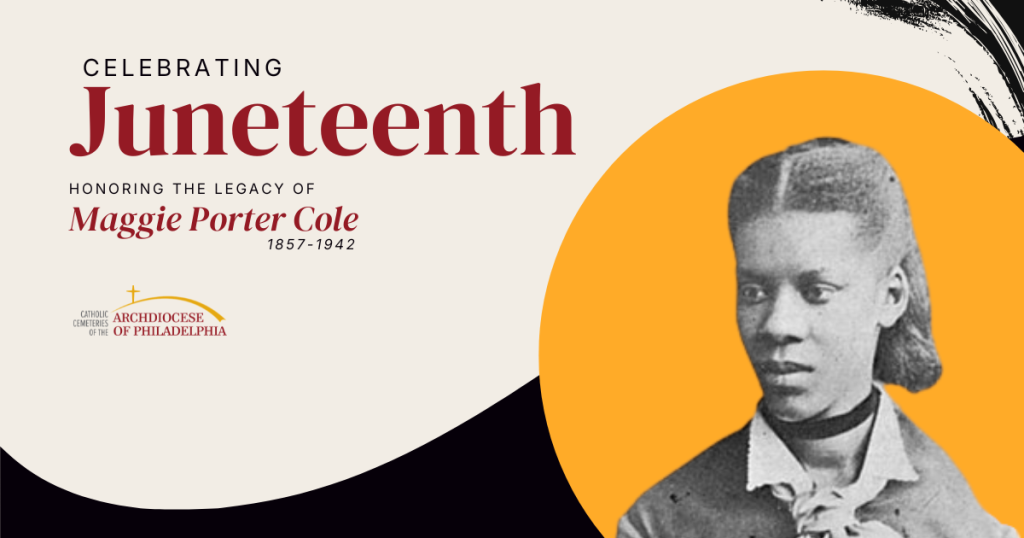
1853 or 1857 – June 15, 1942
Place of Rest: Woodmere Cemetery (Detroit, MI)
“For many doors that money could not open were thrown open to us by reason of our singing.” – Maggie Porter Cole
As a little girl, Maggie would sit outside of Nashville churches to hear choirs sing. She didn’t know it then, but as she memorized every note, she was nurturing a passion for music that would lead her to great places.
Because historical records vary, Maggie is listed as having been born in either 1853 or 1857 in Lebanon, TN. She was born into slavery but freed following the Emancipation Proclamation in 1863.
With a desire to learn, Maggie attended Fisk School in Nashville, a new school founded to educate recently freed African Americans of all ages. After completing her studies, Maggie went on to teach at a few schools. One school was burned down by the Ku Klux Klan, but this did not deter Maggie from working towards the betterment of her community.
Instead, her short career as a teacher was paused when fate heard her rich soprano: her alma mater needed help.
A soprano’s story
In 1871, Fisk School had incorporated as a university, but the young campus was deeply in debt. The university’s treasurer, George White, also happened to be the musical director, and decided to host concerts as a last resort to raise funds.
When George organized a group of singers to form a choir, he knew of a great singer he’d hired to sing in an opera the previous year – Maggie Porter. Maggie was still a teen when she held the leading role in George’s production.
Maggie agreed to join the touring group as one of the original 9 members. This choir was named the Jubilee Singers, later the Fisk Jubilee Singers. They specialized in African American hymns, preserving the songs from days of slavery and their spiritual heritage.
After touring several states, the group became so renowned that they went on to raise $40,000 and save Fisk University. They also used their funds to build a new campus building called Jubilee Hall (now a National Historic Landmark).
Even as they endured the hardships of long-distance traveling and encountered hostile areas that would not provide room and board, the Fisk Jubilee Singers traveled to Europe and sang for figures like President Ulysses Grant, Queen Victoria, Frederick Douglass, Mark Twain, and more.
While there is speculation that Maggie had a reputation as a diva, she toured with the group for 7 years before settling in Detroit, MI.
A legacy of song
After meeting fellow singer Daniel Cole, the couple formed their own Jubilee Singers group and went on to have three children.
Maggie’s impact continued beyond the choir, as she continued teaching music and organizing concerts for the Black community.
When reflecting on her time in the Fisk Jubilee Singers choir, Maggie said, “I live daily in the sweet memories of those days. I often feel my heart quicken when I recall myself for the first time standing before the vast audience…”
Today, the legend of the choir lives on through the Fisk Jubilee Singers®, a Nashville group that receives broad acclaim.
At the end of her purposeful life of great undertakings, Maggie was the last living member of the original Fisk Jubilee Singers. In June 1942, she was laid to rest at Woodmere Cemetery – preceded by her husband and children – and left behind an amazing story of a legacy fulfilled and a talent shared with the world.
———-
1893 Review in the Detroit Plaindealer (the city’s first African American newspaper)
Mrs. Maggie Porter-Cole and her chorus gave another delightful concert at Fraternity hall last Tuesday evening, this time for the benefit of St. Matthew’s church. There was a fair-sized audience present, which frequently showed its appreciation by applause. One who hears one of these concerts is both delighted and inspired; delighted with the sweet music and inspired that we have one who can teach it, and so many whose educated tastes give them power to interpret and sing it so charmingly.
Sources:
Black Past, Maggie Porter
Detroit Area Library Network, Detroit Plaindealer
Fisk University News, Volume II, 1911
PBS, Maggie Porter, Soprano
Smithsonian, A Song from Frederick Douglass
Smithsonian Music, The Fisk Jubilee Singers: Preserving African American Spirituals
Wikipedia, Maggie Porter


